

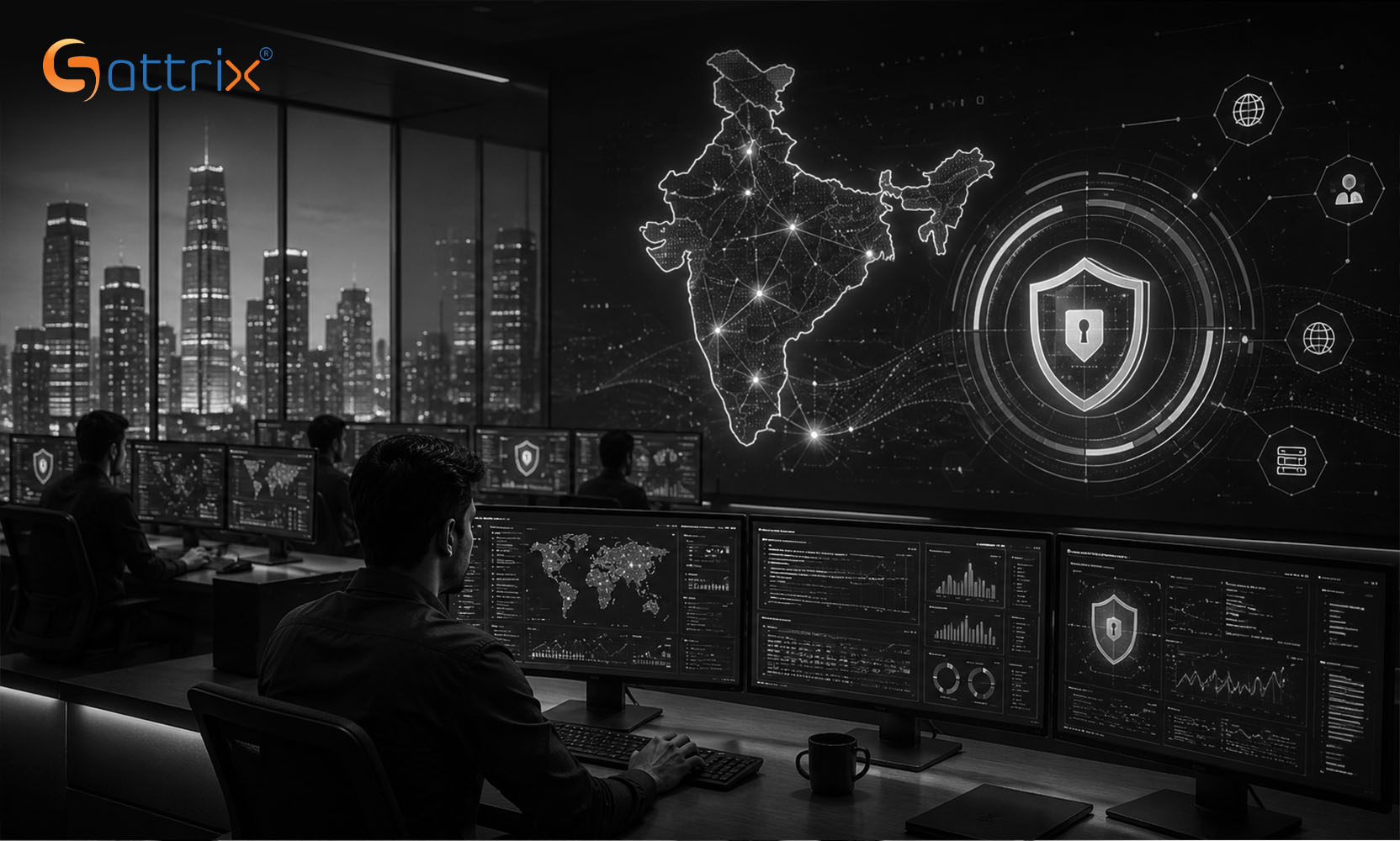
Cyberattacks have become one of the biggest business risks for organizations across India. From startups and mid-sized companies to large enterprises, every organization relies on connected systems, cloud platforms, and digital applications to run daily operations. This dependence has also created more opportunities for cybercriminals to exploit vulnerabilities.
Ransomware, phishing, insider threats, and data breaches are affecting businesses across industries such as banking, healthcare, manufacturing, retail, education, and IT services. Even a single successful attack can lead to financial losses, operational disruption, regulatory penalties, and damage to customer trust.
A Security Operations Center (SOC) helps organizations detect, investigate, and respond to cyber threats before they cause serious damage. Many businesses now rely on SOC Service Providers in India to gain enterprise-grade security without the complexity and expense of building their own security operations team.
A Security Operations Center, often called a SOC, is a centralized team responsible for monitoring and protecting an organization’s IT environment around the clock. It combines skilled cybersecurity professionals, advanced technologies, and well-defined processes to identify suspicious activities and respond quickly.
A SOC continuously protects:
Rather than reacting after an attack has already caused damage, a SOC focuses on identifying warning signs early and stopping threats before they spread across the organization.
Modern Security Operations Centers use technologies such as SIEM, Threat Intelligence, Managed Detection and Response (MDR), Security Analytics, and Security Automation to improve visibility and strengthen cyber defense.
Cybercriminals do not follow business hours. Attacks can happen during weekends, holidays, or late at night.
Continuous monitoring ensures that suspicious activities are detected immediately instead of waiting until employees return to work.
The earlier a threat is identified, the easier it is to contain.
Professional security teams use advanced analytics, behavioral monitoring, and Threat Intelligence to recognize malicious activities before they become major incidents.
Quick action reduces business impact.
Experienced analysts investigate alerts, isolate compromised systems, stop malicious activity, and guide recovery efforts with structured Incident Response processes.
A cyberattack can interrupt production, customer services, online transactions, and internal operations.
Rapid detection and response help organizations restore normal operations much faster while minimizing financial losses.
Ransomware remains one of the most damaging cyber threats affecting Indian organizations.
Professional monitoring can detect unusual encryption activities, suspicious email behavior, malicious downloads, and unauthorized access attempts before ransomware spreads across the network.
Not every security incident comes from outside attackers.
Employees, contractors, or third-party users may accidentally or intentionally expose sensitive information. Continuous Monitoring helps identify unusual user behavior and unauthorized access patterns.
Businesses are increasingly moving applications and workloads to cloud platforms.
A SOC monitors cloud environments for configuration issues, unauthorized access, suspicious logins, and abnormal activities to improve Cloud Security across hybrid environments.
Organizations must comply with various regulatory requirements depending on their industry.
Professional security monitoring supports compliance by maintaining security logs, monitoring critical systems, producing audit reports, and helping organizations meet security standards more efficiently.
Every minute of downtime affects revenue and customer confidence.
Proactive monitoring allows organizations to continue operations with fewer disruptions and recover more quickly after security incidents.
Building an in-house Security Operations Center requires significant investment in:
Many organizations find it more practical to partner with a trusted Managed SOC provider that already has these capabilities in place.
Ransomware attacks continue to target organizations of every size. Attackers encrypt business data and demand payment for recovery, often disrupting operations for days or weeks.
Customer information, financial records, intellectual property, and confidential business data remain valuable targets for cybercriminals.
Strong Data Protection practices combined with continuous Security Monitoring reduce exposure to these risks.
Remote and hybrid work models have expanded the attack surface.
Employees connect from home networks, personal devices, and public internet connections, creating additional security challenges.
Businesses often depend on vendors, suppliers, consultants, and cloud service providers.
A weakness in any connected partner can create a pathway for attackers to reach internal systems.
Cybercriminals are increasingly using artificial intelligence to create convincing phishing emails, automate attacks, and identify vulnerabilities more efficiently.
Organizations need equally advanced security capabilities to detect evolving attack techniques.
Finding experienced cybersecurity talent remains difficult.
Many businesses struggle to recruit and retain qualified analysts capable of providing round-the-clock protection, making outsourcing an attractive option.
Not every provider offers the same level of protection. Consider the following capabilities before making a decision.
Security analysts should continuously monitor alerts, suspicious activity, and system events throughout the year.
A robust SIEM platform collects and analyzes security logs from multiple systems, helping analysts detect threats faster.
Access to current intelligence allows organizations to identify emerging attack techniques and proactively strengthen defenses.
MDR services go beyond alerting by actively investigating suspicious activity and helping contain threats before they escalate.
Automation reduces repetitive tasks, improves response speed, and allows analysts to focus on complex investigations.
The provider should have clearly defined procedures for investigation, containment, eradication, and recovery.
Reporting, log retention, audit assistance, and documentation simplify regulatory compliance.
Easy-to-understand dashboards help management monitor security performance, incidents, trends, and risk levels.
Security requirements change as businesses grow.
The provider should be able to support expanding users, cloud workloads, offices, and business applications.
Technology alone cannot stop cyberattacks.
Skilled security professionals remain essential for investigating alerts, making informed decisions, and responding effectively.
Outsourcing security operations offers several practical advantages for Indian organizations.
Businesses avoid large investments in infrastructure, staffing, software licensing, and ongoing training.
Organizations can quickly implement professional security monitoring without spending months building internal capabilities.
Experienced analysts, threat hunters, and incident responders become available without lengthy hiring processes.
A centralized view across endpoints, networks, cloud environments, and business applications improves overall Business Security.
Continuous assessments, Security Analytics, and proactive monitoring strengthen defenses against evolving Cyber Threats.
Round-the-clock monitoring significantly improves the ability to identify suspicious activities before they become serious incidents.
Selecting the right cybersecurity partner requires careful evaluation.
Consider the following factors:
A provider should understand your business goals rather than offering a one-size-fits-all approach.
Cyber threats continue to evolve, making proactive cybersecurity an essential investment for organizations across India. Businesses need continuous visibility, faster threat detection, rapid incident response, and experienced professionals who can protect critical systems before attacks cause operational or financial damage.
Working with SOC Service Providers in India allows organizations to strengthen their security posture while controlling costs and improving resilience. For businesses seeking reliable cybersecurity expertise, Sattrix offers comprehensive Managed Security Services designed to support modern enterprises with advanced monitoring, threat detection, and expert-driven protection.
A SOC service provider continuously monitors an organization’s IT environment, detects suspicious activities, investigates security alerts, responds to incidents, and helps prevent cyberattacks before they impact business operations.
Outsourcing provides access to experienced cybersecurity professionals, advanced security technologies, continuous monitoring, faster incident response, and lower operational costs compared to building an internal security operations team.
Industries such as banking, healthcare, manufacturing, IT services, retail, government, education, logistics, telecommunications, and e-commerce benefit significantly from professional cybersecurity monitoring and protection.
A Security Operations Center continuously monitors systems, analyzes security events, detects threats early, responds quickly to incidents, supports compliance efforts, and strengthens an organization’s overall cyber defense strategy.
Look for a provider with experienced analysts, modern SIEM and MDR capabilities, 24/7 monitoring, strong Threat Intelligence, compliance expertise, transparent reporting, fast response times, scalable services, and a proven track record of protecting organizations similar to yours.


