

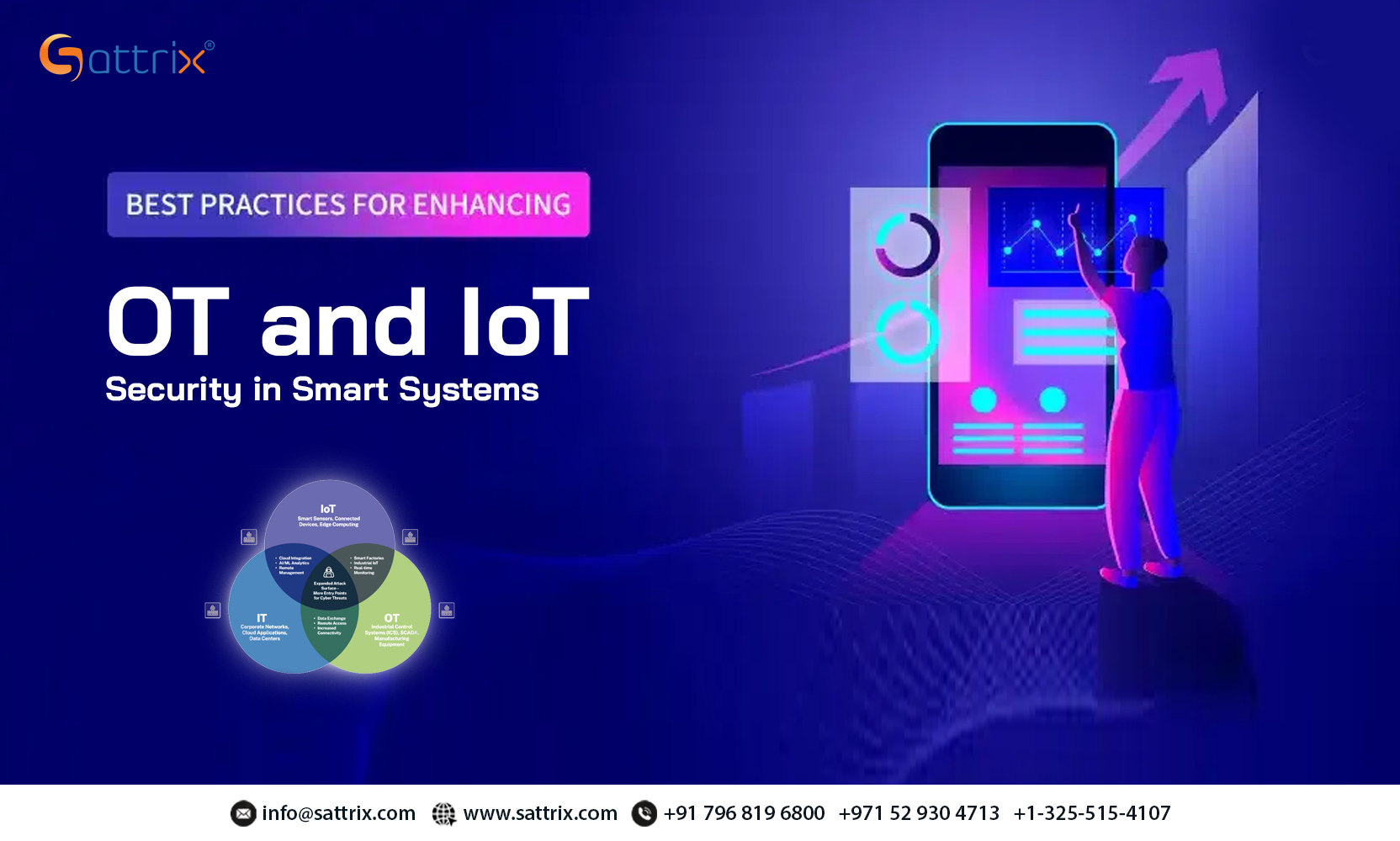
Smart systems are transforming the way industries, enterprises, and critical infrastructure operate across the United States. Manufacturing, utilities, transportation, healthcare, logistics, and public services now rely on connected operational technology and IoT devices to improve efficiency, automate processes, and enhance real time decision making. This rapid shift has created new opportunities for innovation, but it has also expanded the cyber attack surface to an unprecedented level.
IoT Security has evolved into a national priority. The combination of OT networks and IoT devices introduces unique challenges that traditional IT security approaches cannot fully address. These systems were often designed for reliability and long lifespan rather than modern cybersecurity expectations. As a result, they are exposed to threats that exploit legacy protocols, unprotected interfaces, unsecured firmware, weak authentication, and unmonitored network segments.
To secure the future of smart systems, organizations in the United States must adopt advanced IoT Security practices that align with modern threats and regulatory expectations. This blog explores the most important strategies for strengthening OT and IoT environments, improving attack resilience, and safeguarding critical functions.
IoT devices generate high value data that drives automation, efficiency, and predictive insights. At the same time, they create thousands of new entry points for threat actors. Unlike traditional servers or endpoints, IoT devices often lack built in security controls. Many operate with outdated firmware and unsupported operating systems.
In addition, OT environments that were once isolated are now connected to corporate IT networks and cloud systems through modernization initiatives. This convergence brings advantages but also exposes industrial operations to cyber risks that could cause physical disruption.
Three major trends in the United States make IoT Security essential:
Cities, enterprises, and factories increasingly use sensors, connected cameras, smart meters, and industrial robots. Every new connected device introduces potential vulnerabilities.
Energy grids, water systems, transportation networks, and healthcare facilities have all been targeted by threat actors using OT specific intrusion methods. These incidents can cause real world impact.
Agencies across the US emphasize IoT Security through guidelines, risk frameworks, and sector specific regulations. Organizations must demonstrate mature IoT Security practices to meet compliance expectations.
Enhancing IoT Security begins with understanding the unique risks that arise when IT, OT, and IoT converge.
Most organizations cannot accurately identify every IoT or OT asset on their network. Lack of visibility prevents proper monitoring and incident response.
Many IoT devices still ship with default login credentials or use weak authentication models that attackers can easily exploit.
Patching IoT devices is difficult because many lack stable update mechanisms or run on fixed firmware that cannot be easily upgraded.
Older OT systems were never designed to face modern cyber threats. They often use proprietary protocols that lack encryption or authentication.
Once an attacker infiltrates an IoT or OT device, they can pivot deeper into the environment, targeting control systems or sensitive networks.
Understanding these risks forms the foundation for a strong IoT Security program.
Organizations in the United States can minimize cybersecurity risks by adopting a structured, modern approach to IoT Security. These best practices improve resilience and reduce exposure across both industrial and enterprise environments.
You cannot protect what you cannot see. A continuous asset inventory is essential for understanding the devices deployed across networks, their configurations, firmware versions, and security posture.
Advanced IoT Security platforms provide real time discovery of:
With visibility, organizations can detect anomalies, monitor device behaviour, and identify policy violations instantly.
OT and IoT environments should never operate on flat networks. Segmentation limits lateral movement and isolates critical systems from high risk segments.
Network segmentation guidelines include:
Segmentation greatly reduces the impact of a compromised device.
IoT and OT devices require strong access policies to prevent unauthorized control or manipulation.
Recommendations include:
Identity based controls significantly reduce the likelihood of successful intrusion.
IoT devices rarely behave like traditional endpoints. Their communication patterns are predictable, which makes anomalies easy to detect if monitoring is continuous.
AI and behaviour analytics identify deviations such as:
Early detection prevents small anomalies from becoming full scale incidents.
Incident response for industrial systems is different from traditional IT. Safety, stability, and operational continuity are critical considerations.
A strong OT and IoT incident plan includes:
A well structured plan reduces disruption and downtime.
Patching remains one of the biggest challenges in IoT Security because many devices operate on fixed firmware. However, organizations must take steps to reduce vulnerability exposure.
Best practices include:
Secure firmware management prevents exploitation of known vulnerabilities.
Zero Trust improves IoT Security by enforcing strict verification for every device and user.
Zero Trust practices include:
Zero Trust reduces the likelihood of unauthorized access and insider threats.
Sattrix provides comprehensive IoT Security solutions tailored for smart systems, industrial environments, and connected enterprises across the United States. Our approach is built around intelligence driven defense, visibility, automation, and rapid response.
Our strengths include:
We map every device and monitor real time behaviour for signs of compromise.
We use advanced analytics to identify anomalies that traditional tools cannot see.
Our automated workflows isolate compromised devices and prevent lateral spread.
We design secure, scalable network structures that reduce attack risk.
Our team responds to OT and IoT incidents with precision and adherence to operational safety requirements.
Sattrix helps organizations reduce risk, protect critical operations, and enhance long term cyber resilience.
Smart systems will continue to shape the future of American industries, but their growth depends on strong IoT Security practices. As connected devices, automation platforms, and industrial machinery expand, so do the challenges associated with securing them. Organizations must adopt structured strategies that combine visibility, behaviour analytics, segmentation, strong authentication, secure firmware, and modern incident response frameworks.
Sattrix provides the expertise, technology, and intelligence required to secure OT and IoT environments against modern cyber threats. With the right controls and continuous improvement, enterprises can build safe, resilient, and future ready smart systems.
IoT Security protects connected devices, sensors, and industrial systems from cyber threats.
It prevents operational disruption, data theft, and safety risks caused by compromised devices.
Through segmentation, access control, monitoring, patching, and Zero Trust principles.
AI detects anomalies, identifies threats faster, and automates containment actions.
With visibility, automated response, AI detection, and specialized OT and IoT security frameworks.


